
Useful Skill
I started being a mechanic when got my first bicycle but my career as a mechanic started at Castle Park Hawaii working on Go-Karts and Bumper-Boats. Along the way I worked on my motorcycles. Then I got my first motorcycle shop job and soon after, started racing, in ’82.
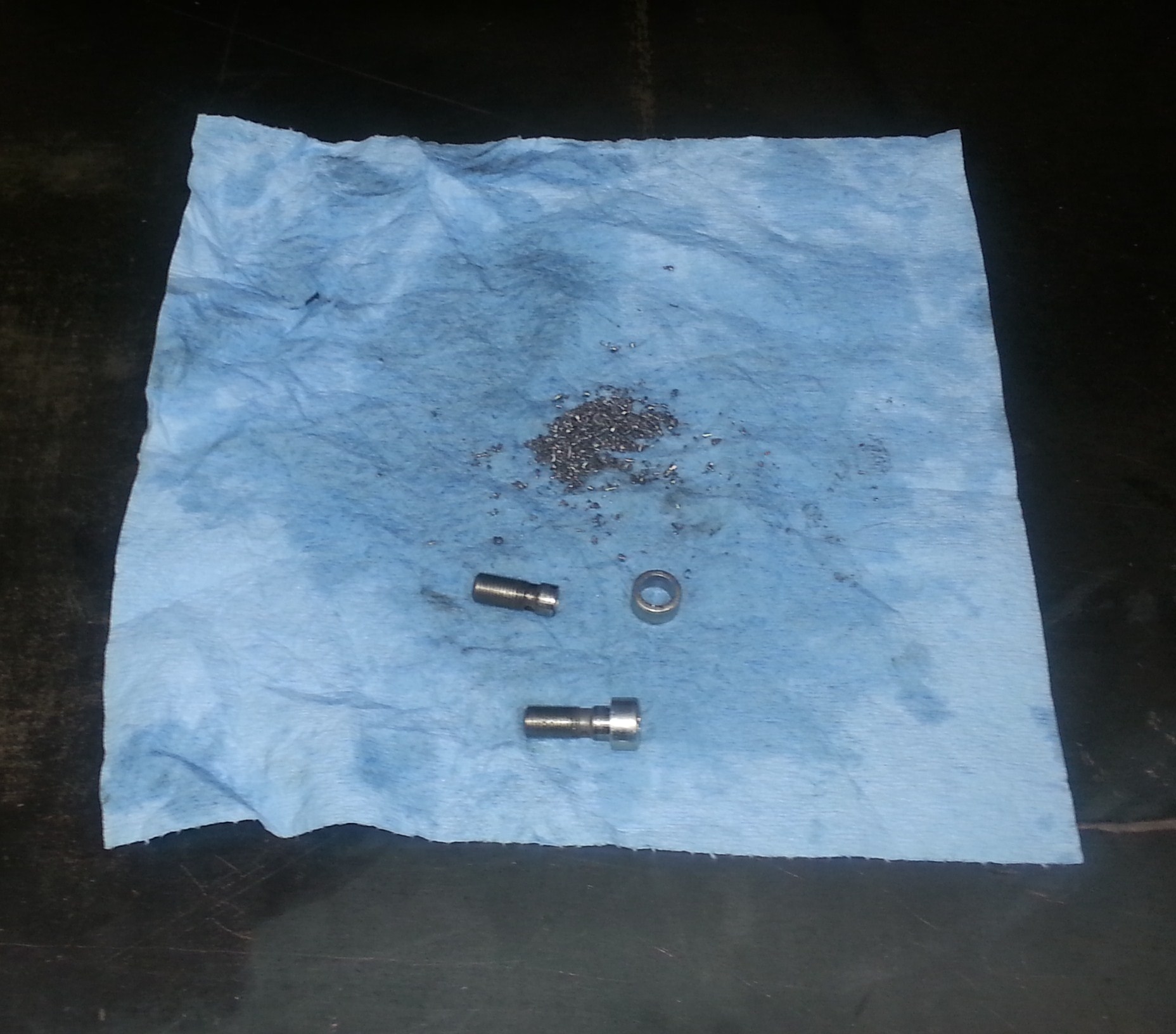
Growing up in Hawaii, I had to deal with a lot of stuck bolts. There are two fork banjo bolts in this photo. The one at the bottom is intact. It holds the cartridge rod to the bottom of the fork. Both of these were over tightened.
On a side note, torque is not set by how worried you are about how important a bolt is, it’s determined by the strength of the bolt.
Anyway, the top bolt was also rounded out where the Allen wrench goes. Because the bolt is up inside the foot of the fork there is no other way to get a hold of the bolt. My solution was to drill down the center of the bolt, with a hand drill, with larger and larger bits till I removed the head of the bolt from the shaft.
If I can get at the head of the damaged/stuck bolt I have a bunch of tools made to grip the head or the shaft. Another good trick for screw heads is to use a chisel and a small hammer to drive the bolt around.
So far, much like how you never see a cat skeleton up in a tree, I have always found a way to remove stuck bolts.
Righty-tighty. Lefty-loosey.
No Dice
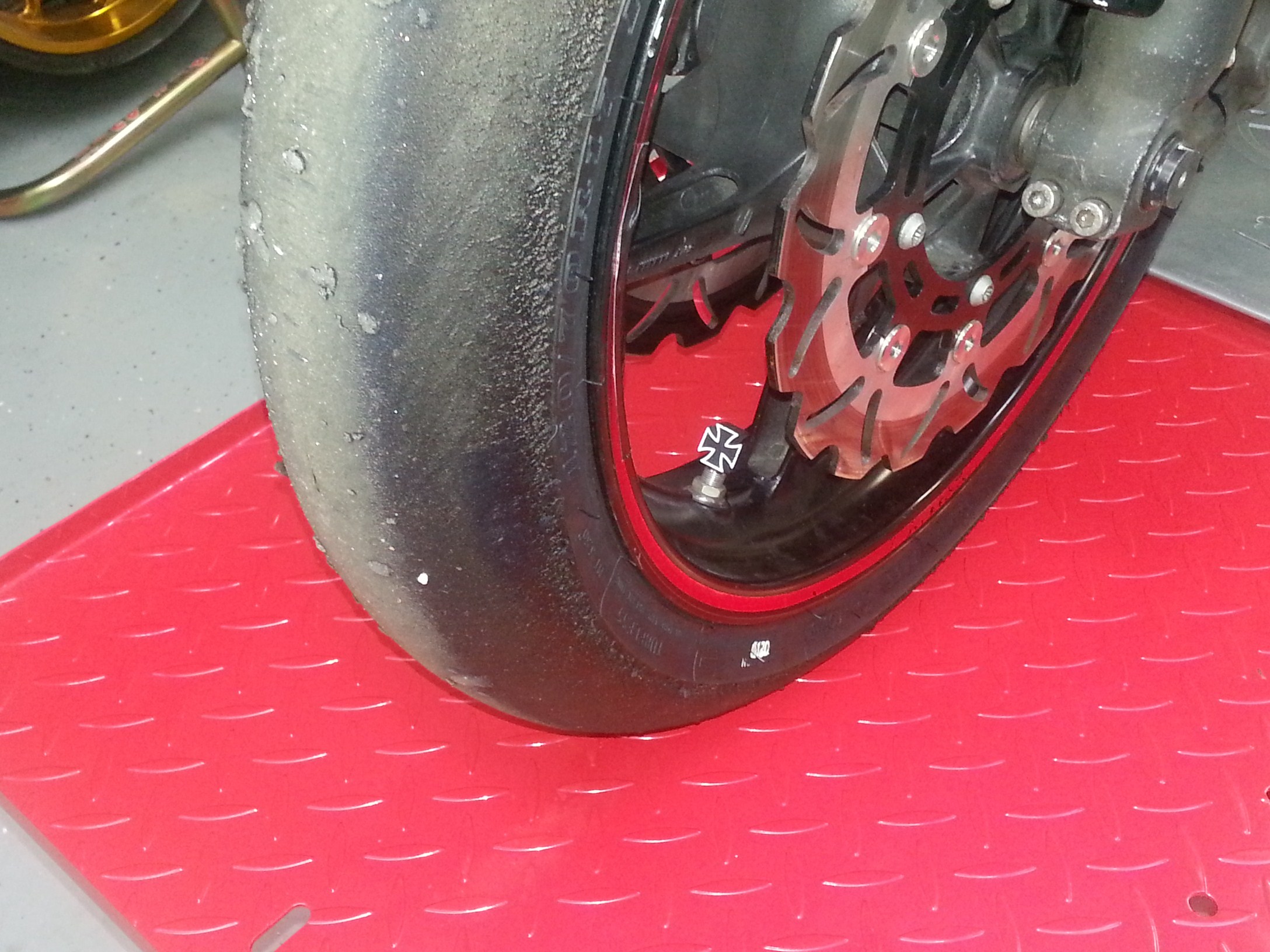
Valve caps with blinking lights, dice or other stuff may look neat as an impulse idea near the cash register but they are just un-sprung spinning mass and worse, to me.
The job of your valve cap is to form an air tight seal so that no air can escape from your tire even when the valve core is forced to open by centrifugal force. I’ve yet to find a seal inside any of these toy caps.
If you still have rubber valve stems you may be surprised to learn that the weight of a toy cap times the rotating speed of the wheel is more than enough to fold the stem over till the cap is pressed against the rim. Do you really want to be folding the thing that keeps the air in your tires?
On my bikes you will only find a properly tightened metal valve cap with a seal inside. You will also find that I have all the air pressure I started with and no extra spinning mass.
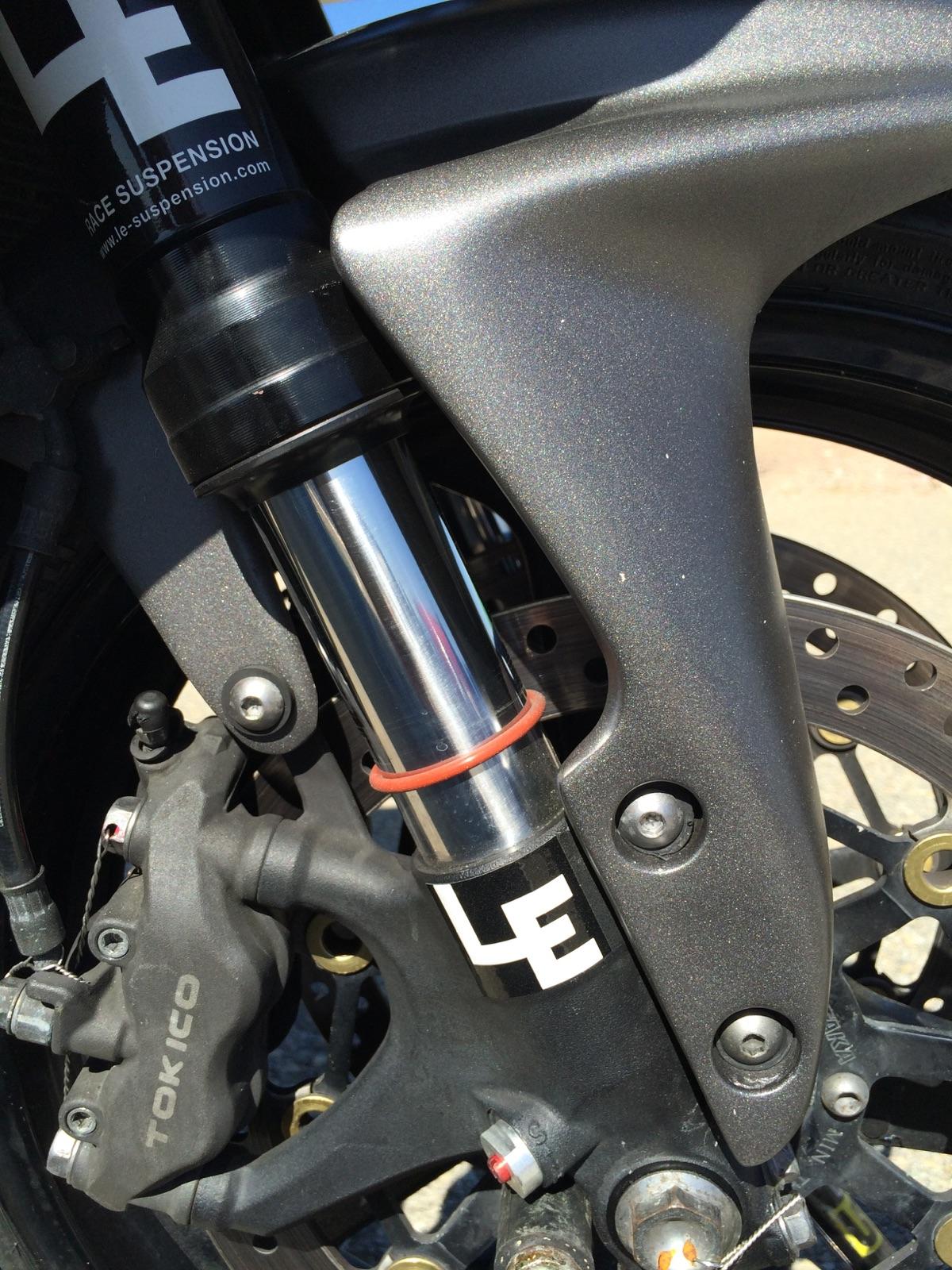
How to Adjust your Suspension
The most common suspension adjusters are pre-load, compression and rebound. This is a guide to help you understand what they do.
Springs: Hold up the weight of you and the bike. Think of them as stronger or weaker.
Pre-load: Only stores energy in a spring, it does not make the spring stronger.
Damping: Controls how fast or slow the suspension moves up and down. Think of damping as faster or slower.
Compression damping controls how fast or slow the suspension gets shorter. Braking, the front of a bump and the start of a turn all compress the suspension.
Rebound damping controls how fast or slow the suspension gets taller. Acceleration, the back of a bump and the end of a turn all let the suspension rebound.
Now to turn these ideas into feelings. This is best done at a track day but you can also pick out a mile or so loop with slow and medium speed turns, bumps and smooth bits. Throughout this test you must ride under control and consistently. Crashing is on you.
First ride your loop to set a base. Then ride the same loop with these different changes. You will need to write down what the bike did/how it felt after each ride.
One ride each, set the adjuster back where it was after each test: Forks & shock together. Compression out, Comp in. Rebound out, Reb in. That’s four rides so far. Now look at your notes. Some changes let the bike move more, some changes make the bike move less. Now you know what they all do and it will be easier for you to find the sweet spot.
Never be afraid to do the wrong thing, you will learn something and you will know to go the other way.
How smart are you? If you make the changes and do the riding, the idea of what you think the bike should do after each change will taint your results. There are four tests here. Ask a friend to make up the order and to repeat two of the tests for a total of six rides. Now you don’t know what has been changed so your test will yield better data. If you give the same feed back for both of the tests that are repeats you know you are a good test rider. If you don’t, then you need to work on your riding skills. This is your control test.
Call me with your questions. If your suspension is stock the changes will be small and sometimes hard to notice. If you have LE suspension the changes will be big and easy to notice.
This is just the beginning. There are many things I left out because you have to start somewhere. The most difficult part is that everything is always changing because the bike is so dynamic.
Good luck Grasshopper.

Reverse Osmosis #24

In Episode 24 of Deep Thinking, the motorcycle road racing (and apparently anything else) podcast, racers Ed Sorbo and Michael Gougis discuss how cool new bike technology requires racers to think about even the simplest of maintenance tasks differently. A discussion ensues about doing tech inspection correctly at the club racing level. Sorbo receives a compliment and is nearly rendered speechless.
Podcast: Play in new window | Download
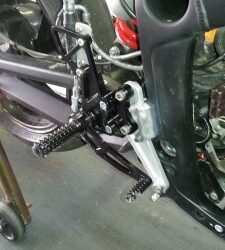
Lindemann Engineering = Full Service
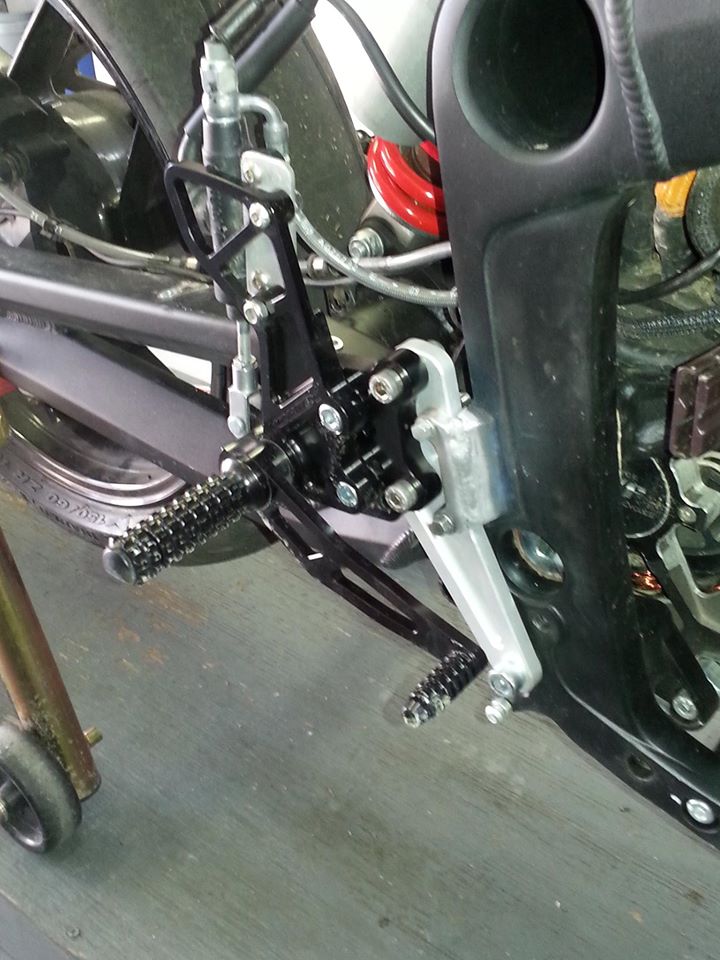
Brandon’s plan for his new Zero was to have me take it from Willow after the races so Lindemann Engineering could improve his suspension. Then he could pick the bike up on Tuesday in time to drive to his next race. A good plan is always a good thing…
Then in his race he got bummed off track and crashed. Not much damage but he needed the broken frame tab welded. He did not know a welder and he thought the weld repair would take up the suspension work time.
I said it would be great if there was a suspension shop owned by a guy who can weld good enough.

Gearheads and Vapor Trails #23

In Episode 23 of Deep Thinking, racers Michael Gougis and Ed Sorbo engage in Dharma Combat over airliner vapor trails and whether Valentino Rossi’s strong early-season showing in MotoGP is a real renaissance or a false dawn. Gougis questions Jorge Lorenzo’s motivation. Sorbo eats a burrito, as nothing has yet turned up from Hickory Farms.
Podcast: Play in new window | Download

Bandits, Bac-Os and Blackbirds #22
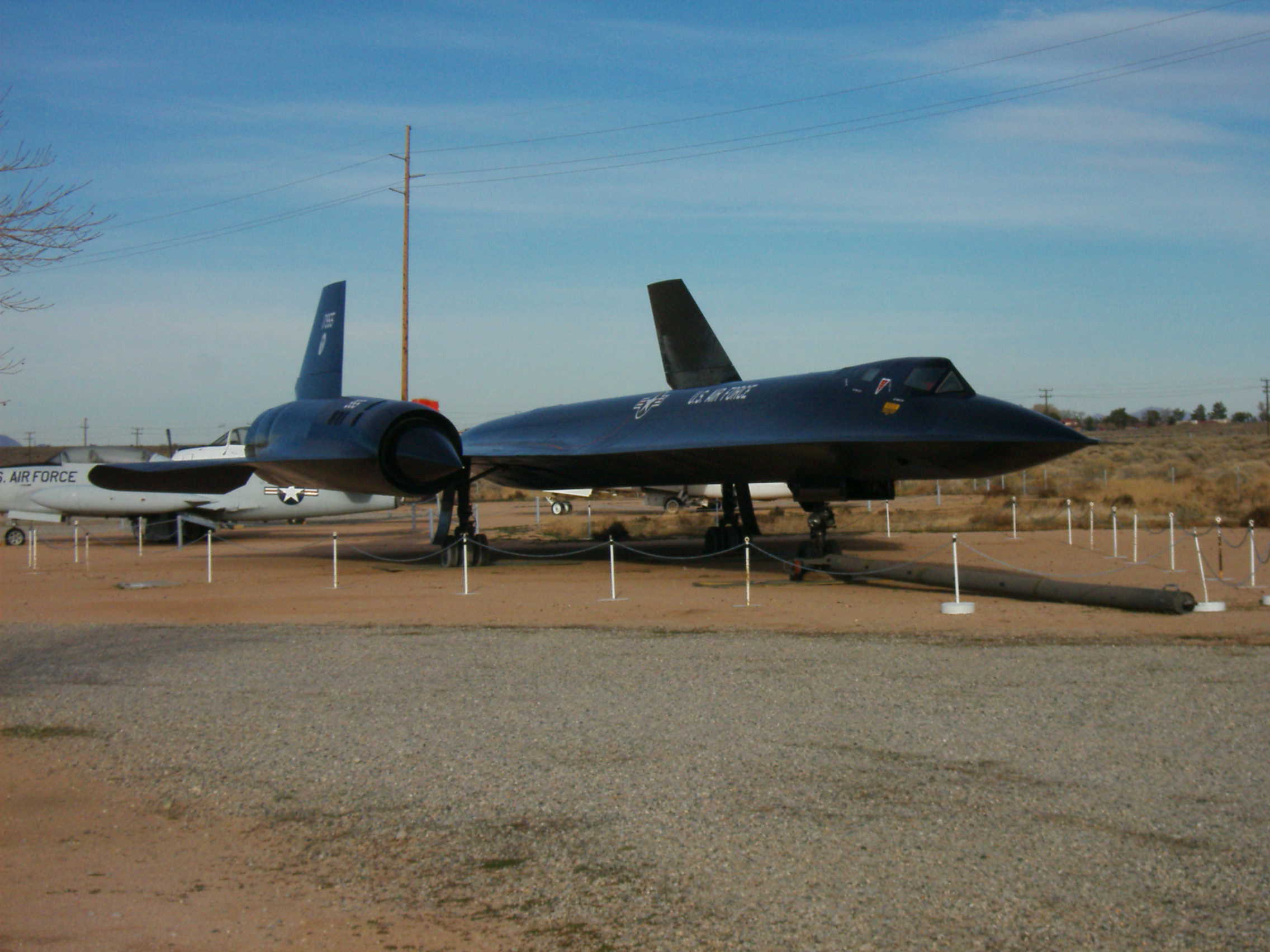

Racers Ed Sorbo and Michael Gougis discuss technology, racing, and why it’s dumb to make someone take the stock ECU off of a streetbike before it is eligible to race in a Superbike class! A discussion ensues about the relative merits of fake bacon-flavored bits and a Suzuki GSF1200 Bandit, with the Bandit coming out ahead. The Honda Blackbird CBR1100XX is praised. It becomes increasingly clear that Gougis is unclear on the easter egg concept.
Podcast: Play in new window | Download

The Podcast In Print:
Point/Counterpoint by Ed Sorbo and Michael Gougis
(Eds. Note: Racers Ed Sorbo and Michael Gougis talk incessantly about motorcycle road racing on the phone and in podcasts. Apparently, that’s not enough, because they also exchange emails on the subject. We’ll publish some of their exchanges.)
Endurance Racing: What Happened?
Ed Sorbo:
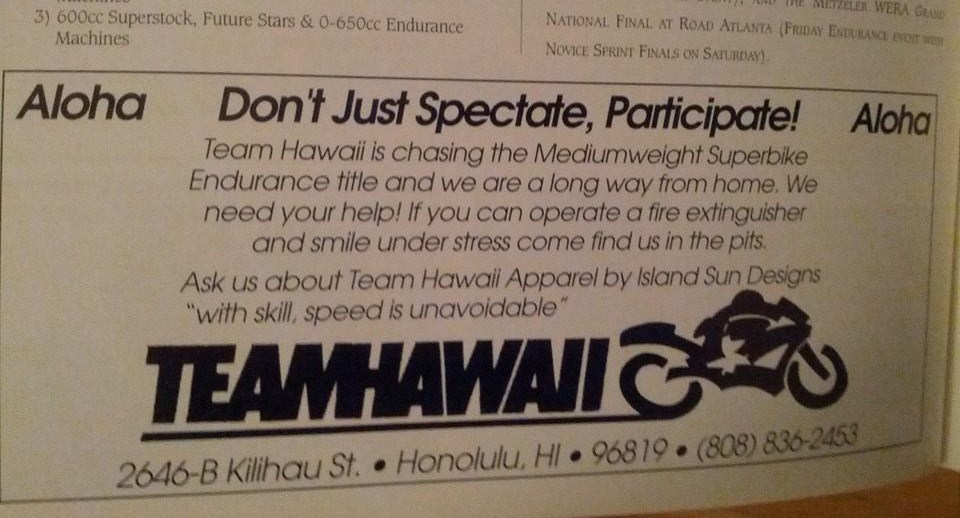
In 1986 my friends in Hawaii and I pooled our resources, shipped a bike over to the mainland and raced in the WERA National Endurance Series as Team Hawaii. Our endeavors grew over the years to include Team Hawaii Too, seven 24-hour races and many four- and six-hour races mixed in with sprint races at shared events. In 1990 we were high enough in the National points that we were guaranteed a starting spot at each event. This was important because there was always a waiting list, the grids were full all season with 40 bikes lined up for a chance to charge around for hours on end.
Fast forward to now. What the hell happened?
Used to be it was easy to find someone who would share a bike so maybe rising bike costs are part of the problem. Used to be that you could crash your steel-framed bike numerous times, whack the bars back into alignment, get re-teched on pit lane and just keep racing. Used to be you could work on your bike during a red flag…
Michael Gougis:
Dude, it’s not even sharing a bike that’s the big problem. When I helped start the racing series at Chuckwalla, we incorporated a one-hour tag-team event. You could let your friend race his or her bike for their leg, then you could do your leg on your machine. The freakin’ races even had a small cash purse for the teams on the podium. The first race, you had to swap transponders. The ones after that, you didn’t even need to do that – just come into the pits, tag your teammate and they’d speed off.
Grids – miniscule.
I wrote the rules for an endurance race Shandra Crawford staged at Willow back in 2010. It was just a four-hour.
Grids – miniscule.
I’ve got one thought as to what happened. With the rising average age of racers, fewer were willing to put in the effort of riding that long at a time. Part of the reason I’ve done as well as I have at the Solo 20-lap races at Willow and elsewhere is that so many other riders simply didn’t train or prepare mentally to ride for a measly 20 laps.
I think that a culture of six-lap sprint races has left the average club racer’s body and brain unwilling to try. And let’s put this into perspective: A 20-lap race at Willow is five laps SHORTER than the 25-lap AMA Superbike National that took place at the track in 1998. But 20 laps is considered an “endurance” race? Huh?
Sorbo:
I agree, Solo 20 is not an endurance race, it’s extra Saturday practice. You’re on to something with the six-lap culture. I’ve seen fast club guys show up at Pro races and only practice for their normal club amount of practice time. I never even saw them in the race.
Endurance racing is more work than sprint racing. It takes a different outlook and has different goals. It teaches different skills by rewarding consistency and planning above outright speed. It is therefore the best way to train. Ask Josh Hayes how many laps he did on Team Hammer endurance bikes.
Problem is very few people start out with endurance racing like I did. They need to be shown how good it is for them. At this point any club is taking a big risk scheduling an endurance race because most people won’t sign up.
In defense of the non endurance wimps, a modern bike with modern tires is a much faster combination than the bikes and tires of the eighties and nineties and therefore is more work to ride longer. However, that is all the more reason to work on consistency.
Whatever shall we do?
Gougis:
Ed, you’re wrong, and here’s why: It’s not harder to ride a modern bike than a bike from the 80s. People used to follow me into the pits when I raced a GPz550 and ask me what was wrong with the bike, because it looked perfectly evil out there – and I was like, what are you talking about? That’s normal!
I’m not sure it has anything to do with the machines. I think it’s the generation of riders raised on an 18-minute track day session diet – and many of whom can’t even make it through a session. Add to that a lack of an understanding as to why the club (or even pro organization) should offer such races, and the expense involved in doing it, and the fact that a club operator figures they can cram three sprint races into the space of a one-hour team challenge, and you’ve got an explanation as to the demise of the discipline.
The fix comes in small doses. CMRA runs Solo 30 and Team 60 races. They don’t do it every round, but when there’s time on the schedule, they slot them in. Those racers are using the shorter endurance races to get ready for the sprints – check out the names atop the points tables. And those racers are better prepared for not just the sprints, but for the full 4-, 6- and 8-hour endurance races. Moto West Grand Prix ran Solo 20 races in 2014. Ron Cole ran them and you could see him improve from weekend to weekend. By the end of the year, he was on the podium in the expert Formula One races.
The fact is that endurance racing makes better sprint racers – at least at the club level. Clubs could market that fact to their racers, give them just a bit of a break on the entry fee, and look for sponsors to back the races (I’d go with tire and oil companies, myself). When I say a break on entry fees, say for a 60-minute tag-team race, charge the team the cost of two sprint races. The club might be able to run three sprints during that period, so charging for two is a bit of a discount.
And stick with it. It doesn’t pay off immediately. But I can tell you that I know of people who aren’t sprint racing on Sundays because they no longer get to do long races on Saturdays.
Sorbo:
Dude, you get way too much enjoyment out of saying I’m wrong. Faster bikes are harder to ride than slower bikes. Lots of reasons why endurance racing has bottomed out. We agree that endurance racing is good for you like fluoridated water, vaccinations and the scientific approach.
That crazy club based in Texas is doing good stuff with endurance races, the mini clubs in SoCal are doing a good amount of endurance including true endurance racing, 24 Hours.
The fix is as easy as getting McDonalds to bring back the McRib. Vote with your dollars. Enter every endurance race you can. Explain to your friends why they should team up with you. You think tires will cost too much? Use track day tires, they cost less and last longer, less pit stops and the whole point is to work on your consistency.

Charlie Don’t Surf #21

Racers Ed Sorbo and Michael Gougis analyze in detail the road racing miracle that was Marc Marquez’ pole-taking and record-setting lap at the MotoGP race in Austin. Sorbo also notes that the difference between winners and losers can come down to the coordination of the support squad. A discussion ensues about easter eggs and movie references. An ominous warning to astronauts on the International Space Station is issued.
Podcast: Play in new window | Download
Stephen Hawking Sings Monty Python… Galaxy Song
Whenever life gets you down, Mrs.Brown
And things seem hard or tough
And people are stupid, obnoxious or daft
And you feel that you’ve had quite enough
Just remember that you’re standing on a planet that’s evolving
And revolving at nine hundred miles an hour
That’s orbiting at nineteen miles a second, so it’s reckoned
A sun that is the source of all our power
The sun and you and me and all the stars that we can see
Are moving at a million miles a day
In an outer spiral arm, at forty thousand miles an hour
Of the galaxy we call the ‘milky way’
Our galaxy itself contains a hundred billion stars
It’s a hundred thousand light years side to side
It bulges in the middle, sixteen thousand light years thick
But out by us, it’s just three thousand light years wide
We’re thirty thousand light years from galactic central point
We go ’round every two hundred million years
And our galaxy is only one of millions of billions
In this amazing and expanding universe
The universe itself keeps on expanding and expanding
In all of the directions it can whizz
As fast as it can go, the speed of light, you know
Twelve million miles a minute and that’s the fastest speed there is
So remember, when you’re feeling very small and insecure
How amazingly unlikely is your birth
And pray that there’s intelligent life somewhere up in space
‘Cause there’s bother all down here on Earth